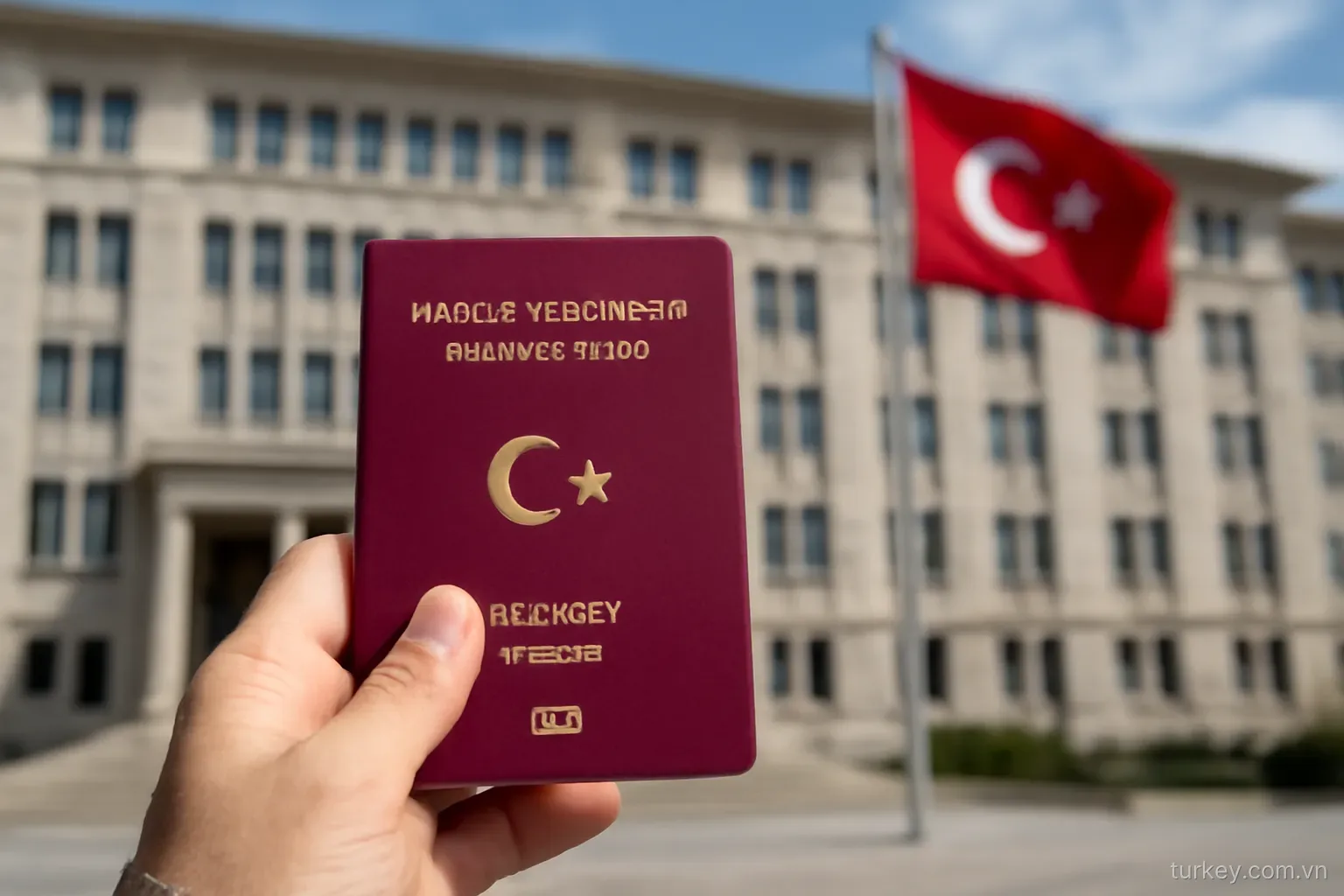
Türkiye's paperwork is lighter than many European files, but it has specific formal requirements that catch people out.
The legalisation question
Türkiye is party to the apostille convention, so documents from other member countries generally need an apostille rather than full consular legalisation. Documents from non-member countries need the longer consular chain.
Three practical rules:
- Confirm which applies to your country before starting — the two chains are not interchangeable
- Documents then require translation by a sworn translator and notarisation in Türkiye
- Order matters: apostille first, then translate — doing it in reverse means repeating the work
Four document groups
- Identity — passports for every family member with sufficient validity, birth certificates, marriage certificate
- Criminal record — from your country of nationality and of long residence
- Financial and investment — title deed or bank confirmation, valuation report, proof of transfer through the banking system
- Health — insurance where required by the permit category
Group three is where files most often fail on the investment route: the chain of payment must be documented, including any required currency conversion evidence.
Six mistakes specific to this market
- Valuation below the threshold — obtain it before committing
- Payment routed outside the banking system or in cash
- Buying in a district closed to new foreign registrations
- Buying a property lacking its occupancy permit
- Buying from a seller whose status disqualifies the transaction
- Name transliteration inconsistencies between passport and civil documents
The last is more common here than elsewhere because names are transliterated into the Turkish alphabet. Agree the spelling once and use it consistently across every document.
The interpreter requirement
At the land registry and at the notary, buyers who do not speak Turkish need a sworn interpreter. This is not optional and cannot be substituted by a friend or the agent. Budget for it and book it in advance.
Protecting yourself
Keep copies of everything filed; keep receipts for every step; and use your own lawyer rather than one supplied by the seller or the agency. In a market with a distinct foreign-buyer segment, independent representation is the only reliable safeguard.
Need a tailored roadmap?
Viking Global Group walks with you from paperwork to settlement. Call +849.219.219.88 or email [email protected] for a free consultation.
Related articles
- Launching a business in Türkiye on a residency track
- Health cover in Türkiye for new residents
- Immigration & Citizenship
Frequently asked questions
What documents are needed for Turkish residence or citizenship files?
Common documents include passports, photos, birth and marriage certificates, criminal record certificates, proof of address, health insurance, tax number certificates, investment proof such as title deeds and valuation reports, and bank records. Foreign documents require legalisation and sworn translation.
What are common delays in Turkish applications?
Delays often arise from missing apostilles or legalisations, incorrect translations, inconsistent names between documents, incomplete valuation or payment records, and appointment backlogs. Careful preparation and legal support reduce delays.
How is the online residence permit system used?
Applicants fill in forms online through the immigration authority's system, upload documents, pay fees and book appointments. Accurate data entry is important, as errors can lead to rejection or require repeat appointments.
What proof of funds is needed for investment files?
Investors must show bank transfer records proving foreign currency was brought into Türkiye and converted as required, along with purchase contracts and title deeds. Clear documentation of the source of funds supports security checks.
What should applicants do if a file is rejected?
Applicants can review the reasons, correct deficiencies and reapply or appeal through legal channels. A lawyer can advise on deadlines and strategies. Staying beyond permitted durations should be avoided during appeals.
Information is for reference and may change under the latest official policy. Please contact us for current regulations.