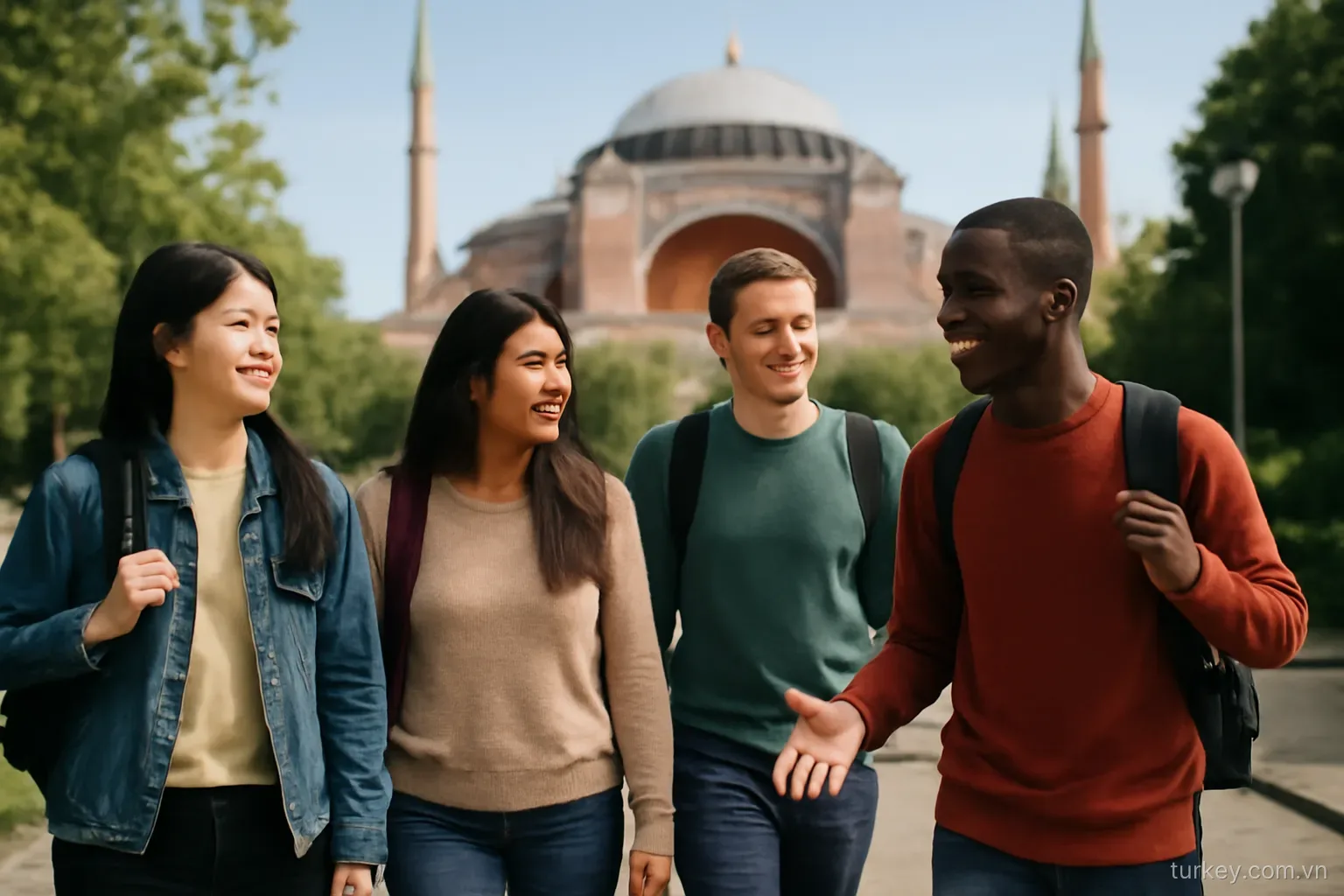
Türkiye has become a substantial destination for international students, for reasons that are easy to state: low tuition relative to Europe, a large university system, and a growing number of English-taught programmes.
What makes it attractive
- Tuition well below Western Europe and North America, at both state and private universities
- English-taught programmes available at many institutions, particularly at postgraduate level and in private universities
- Low living costs for someone funded from abroad
- Government scholarship programmes for international students, which are genuinely substantial and cover living costs
Point four is worth investigating properly: the state scholarship scheme covers tuition, accommodation and a stipend for successful applicants, and is competitive but real. Most families never look into it.
The route to staying afterwards
Here the shape is specific:
- A student permit is a residence permit, and time on it counts toward long-term residence at a reduced rate in many calculations — check the current rule
- Graduates may apply for a short-term permit to look for work after completing their studies
- Moving to employment requires a work permit, subject to the employment ratio rule
- Naturalisation by residence requires several years plus Turkish language
The honest reading: studying here is excellent value; staying afterwards is possible but constrained by the same work permit rules that affect all foreign workers.
How families combine it with the investment route
A pattern worth knowing: families who take citizenship by investment find that their children then study as citizens — paying domestic tuition rates, with no student permit, no work restrictions after graduation, and no employment ratio problem.
For a family already considering both, that interaction is worth pricing: the citizenship route removes every constraint on the study-then-work path at once.
Three things to check before choosing a university
- Is the institution recognised by the higher education authority
- Will the degree be recognised in the country where the student may later work
- What language is the programme actually taught in — some advertise English but teach partly in Turkish
Point three is a real complaint from international students. Ask current students, not the admissions office.
Need a tailored roadmap?
Viking Global Group walks with you from paperwork to settlement. Call +849.219.219.88 or email [email protected] for a free consultation.
Related articles
- Cost of living in Türkiye: what a month costs
- Why Türkiye is a destination worth considering for migration and investment
- Study Abroad
Frequently asked questions
Can studying in Türkiye lead to residence?
A student residence permit allows living in Türkiye during studies. It does not automatically lead to permanent status, but time spent may partially count toward long-term residence. Graduates may move to work permits if they find employment.
Which programmes attract international students?
Türkiye offers programmes in English and Turkish at public and private universities, with strengths in engineering, medicine, business, architecture and international relations. Türkiye Scholarships attract many international students.
Can international students work in Türkiye?
Students may work part-time after obtaining permission, usually after the first year for undergraduates. Opportunities are limited without Turkish, so students should not rely on work income to cover tuition.
What happens after graduation?
Graduates who find employment can apply for work permits. Some may pursue further studies. Without a new permit basis, graduates must leave or change their residence category before their student permit ends.
Is Türkiye a good choice for students seeking international careers?
Türkiye offers affordable education, diverse programmes and a strategic location. Graduates can pursue careers in Türkiye, the Middle East or Central Asia, especially if they learn Turkish and build regional networks.
Information is for reference and may change under the latest official policy. Please contact us for current regulations.